If you’re a newly qualified therapist, whether that’s massage, reflexology, facials, nails, lashes or brows, one of the first big decisions is where you’ll actually work.
The short answer
There’s no single right answer, just the right one for you right now.
- Working from home: no travel and your own set-up, but more to check (mortgage or landlord, insurance, business rates, planning, music and safety).
- Working mobile: nothing to change at home, but more time in the car, more kit to carry and business-use car insurance.
- Renting a room: a professional space without changing your home, but a regular cost to cover.
Whichever you choose, get the right insurance, check your council’s licensing rules, and keep learning.
Congratulations. Now what?
You’ve passed. You’ve got the certificate. You’ve practised on every friend, relative and slightly reluctant partner you own.
Now comes the big question: do clients come to you, or do you go to them?
Here’s a practical, UK-focused checklist for each option. It isn’t legal advice, and rules change, so use it as a list of things to check with the right people.
First, the things that apply whichever you choose
Insurance
Professional indemnity and public liability insurance are treated as essential for therapists.
Check your insurer accepts your qualifications first. Insurers don’t all accept the same courses. Ask before you buy a policy and, ideally, before you sign up to a new course, so you know the certificate you’re paying for will be accepted.
Then check the policy covers:
- every treatment you plan to offer
- where you’ll work (your home, clients’ homes, a treatment room, events)
- your equipment, if it’s stolen from the car or damaged
Do I need a licence to work as a therapist?
It depends on the treatment and on your council, so this is the bit that catches people out.
Massage, facials and similar treatments. As it stands, Plymouth doesn’t require a licence for massage, but rules can change, so always check. In London, many boroughs run a massage and special treatment licence. If you work across more than one council area (Plymouth, South Hams and Cornwall, for example), check each one.
Microblading, semi-permanent make-up, tattooing, cosmetic piercing, electrolysis and acupuncture. These need registering with your council. In Plymouth, that means registering you AND the premises, so sort both before you see a paying client, and again if you move.
Aesthetics (injectables, fillers, some lasers and peels). The government is planning a licensing scheme for non-surgical cosmetic treatments in England, with the highest-risk ones limited to qualified healthcare professionals. It isn’t in force yet, so keep an eye on it if aesthetics is part of your plan.
The golden rule: check with your own council’s licensing team before you start. A quick email now is a lot cheaper than a problem later.
Professional bodies
Joining a professional body is optional. Some therapists find one useful for guidance, insurance deals, networking and someone to ask when they’re stuck. Have a look at a few and see which suits your treatments and your needs. Each sets its own entry requirements, so check they accept your qualification before you apply.
CPD
Your qualification is the start, not the finish line. Insurers and professional bodies may ask for evidence of continuing professional development (CPD), but it’s also good for you: new skills, fresh ideas and more confidence with your clients.
Top tip: keep a CPD folder (paper or digital) and drop certificates and notes in as you go. Future you will be very grateful.
Option 1: working from home
The good bits
- No lugging a couch or kit up three flights of stairs
- Your room, your music, your towels, your temperature
- No travel between clients, so more bookings in a day
What to check first
Mortgage or landlord. GOV.UK says you may need permission from your mortgage provider or landlord to run a business from home. Ask before you start, not after.
Home insurance. GOV.UK warns that home insurance may not cover your business, including customers visiting. Tell your insurer, and make sure your business insurance covers clients on your premises.
Business rates. You may have to pay business rates on the part of your home you use for your business, as well as Council Tax on the rest. It depends on whether the Valuation Office Agency gives that part of your home a rateable value. Your local council’s business rates team can tell you more.
Planning. You may need planning permission if your home will no longer be mainly a private house, if there’ll be a marked rise in traffic or people calling, if the business involves anything unusual for a residential area, or if it disturbs the neighbours. A few clients a week is very different from a steady stream all day. If in doubt, ask your local planning team.
Music. If you play music (radio, streaming or CDs) while clients are with you, you’ll usually need TheMusicLicence from PPL PRS. They don’t charge homeworkers working alone with no customers, but once clients can hear it, it counts as a business. Check with them before you press play.
Parking and neighbours. Where will clients park? A friendly word with the neighbours goes a long way.
Safety. You’ll be alone in your home with people you may not know. Have a buddy who knows who you’re seeing and when. Take new clients by referral or after a short phone chat. Keep your personal and business spaces separate where you can.
Option 2: going mobile
The good bits
- Nothing to change about your home
- Clients love the convenience (and not having to drive home all floppy and relaxed)
- You can reach people who can’t easily travel
What to check first
Car insurance. Standard “social, domestic and pleasure” cover usually doesn’t include driving to clients. That’s normally business use. Ring your insurer and ask.
Kit. A good portable couch or chair, covers, towels, products, a blanket or small heater, hand sanitiser, and a bag system you can pack in the dark. Think about your back. Lighter kit and a trolley are worth every penny.
Travel time and pricing. This is where new mobile therapists undercharge. A one-hour treatment can take two hours of your day once you add setting up, packing down and driving. Price for your time, not just the treatment. Plenty of therapists add a travel charge beyond a set distance.
Mileage. If you’re self-employed, you may be able to use HMRC’s simplified expenses for business mileage. For the 2026 to 2027 tax year it’s 55p a mile for the first 10,000 miles in a car (up from 45p), then 25p. Keep a mileage log from day one, and check with an accountant.
Safety. You’re walking into places you don’t know. Let someone know where you are and when you’ll be done. If something feels off on the doorstep, it’s fine to make an excuse and leave.
Option 3: renting a treatment room
The good bits
- A professional space without turning your spare room into a clinic
- Clients don’t need to know where you live
- Your kit stays put, and so does your back
- Other therapists around for a chat, a referral or a second opinion
What to check first
Cost versus bookings. Work out how many treatments cover the rent before you commit. A half day or day a week is a gentle way to start while you build up regulars.
What’s included? Couch, towels, laundry, heating, Wi-Fi, a sink? It all affects what you need to buy and carry.
Insurance. Make sure your policy covers you working from someone else’s premises.
Licences. If your treatment needs council registration, it may cover the premises as well as you, so check before you book a room.
The agreement. Read it properly. Know your notice period and what happens if you need to cancel.
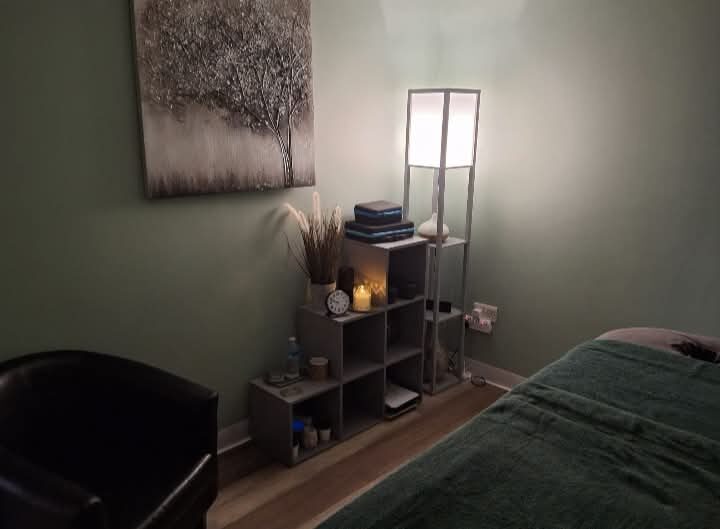
At Plymouth Wellbeing Centre in Estover, near Derriford, therapists rent rooms by the week, the day or the half day. Have a look at our rooms.
So which one?
Ask yourself:
- Do I have a suitable room at home, and am I allowed to use it?
- Am I happy with clients knowing where I live?
- Do I have a car, and do I mind spending my day in it?
- Does my treatment need registering, and where?
- Where do my likely clients live, and what do they want?
Plenty of therapists mix and match: a rented room for regulars, mobile visits for people who can’t travel. You don’t have to pick forever. Pick for now, and review in six months.
Thinking about training?
Plymouth Holistic Training runs therapy and beauty courses in Plymouth, including accredited courses and VTCT qualifications, with plenty of hands-on practice. Check with your insurer that a course is accepted before you sign up. See our courses and dates.
Frequently asked questions
Do I need a licence to be a massage therapist in Plymouth?
As it stands, no. Plymouth doesn’t currently require a licence for massage, but rules change, so check with the council’s licensing team. Other councils, including many London boroughs, do license massage.
Do I need to register to do microblading?
Yes. Microblading counts as semi-permanent skin colouring, so you need to register with your council. In Plymouth, that means registering you AND the premises.
Do I need a music licence as a therapist?
Usually, yes, if clients can hear the music. That includes the radio and streaming. Check with PPL PRS for your situation.
Do I need planning permission to work from home?
Not always. You may need it if your home stops being mainly a private house, there’s a marked rise in visitors, or the neighbours are disturbed. Check with your local planning team.
Sources
- GOV.UK: Running a business from home (permission, business rates, insurance)
- Planning Portal: Working from home, planning permission
- GOV.UK: Simplified expenses, vehicles (mileage rates)
- PPL PRS: TheMusicLicence
- Plymouth City Council: Beauty and body art licence
- GOV.UK: Licensing of non-surgical cosmetic procedures in England
- Example London licence: Richmond upon Thames, massage and special treatments
- Suzy Lamplugh Trust: Personal safety at work