I first trained in reflexology in 1995, just off Oxford Street in London. I loved it. Then life happened, and I spent the next couple of decades in a series of very boring jobs. (I won’t name them. They know who they are.)
In 2018 I finally came back to reflexology, and this time I didn’t stop. Massage, facials, aromatherapy and a whole host of other treatments followed, then teaching, then a wellbeing centre. But reflexology is where it all began, and after all these years it still intrigues and amazes me.
What is reflexology?
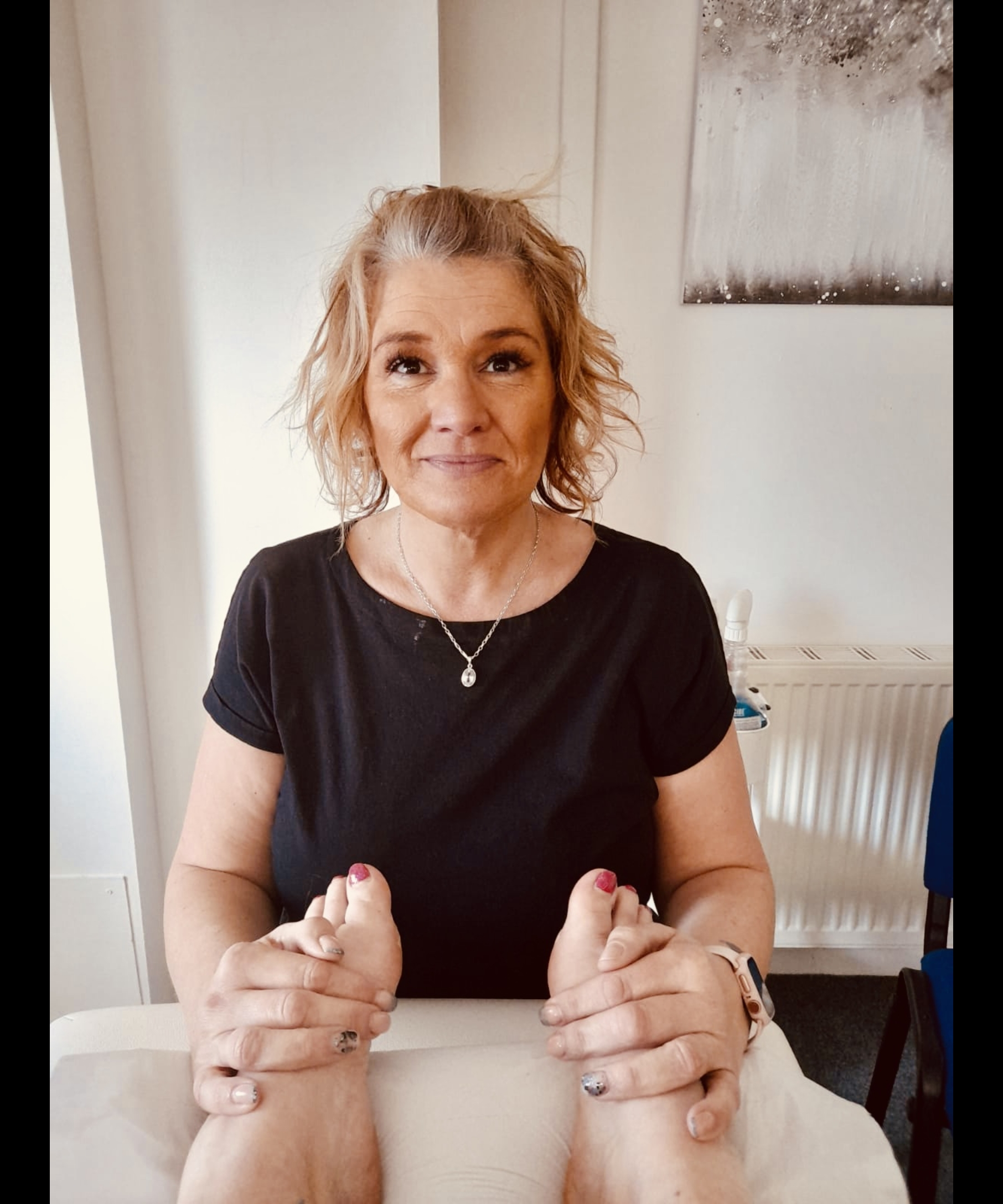
Reflexology is a gentle, hands-on treatment, usually on the feet. The practitioner applies pressure to specific areas thought to relate to other parts of the body. Most people find it deeply relaxing. Quite a few fall asleep, and nobody minds.
It isn’t diagnostic. A reflexologist can’t tell you what’s wrong with you by looking at your feet. It’s a complementary therapy, so it sits alongside your usual healthcare, not instead of it.
What I believe
I could never, and would never, make wild claims about reflexology. Over the years, clients have shared some remarkable and very personal stories with me about what they feel it helped with. Those are their stories, not mine to tell.
What I will say is that I’m a massive believer in the therapeutic relationship. An hour with someone who gives you their full attention, without judgement, is powerful stuff. I’m also a fan of the placebo effect. If believing something will help you relax actually helps you relax, I’m all for it.
And never underestimate the balancing effect of simply lying down, with your phone in another room, and switching off. It’s hugely underrated. When did you last do it?
So how does it work?
Honest answer: nobody knows for certain. But there are some intriguing theories. Here are three.
1. Zone theory. In the early 1900s, American surgeon Dr William Fitzgerald divided the body into ten vertical zones running from head to toe. In the 1930s, nurse and physiotherapist Eunice Ingham mapped those zones onto the feet. Her maps are the basis of most reflexology today.
2. Nervous system theory. Your feet are packed with nerve endings. One idea is that pressure on them sends calming signals through the nervous system, helping the body move out of “fight or flight” and into “rest and digest”.
3. Energy theory. Older traditions, including Chinese medicine, describe energy flowing through channels in the body. In this view, reflexology helps ease blockages so energy can flow more freely. There’s even a carving in an Egyptian tomb from around 2330 BC that appears to show hand and foot treatments, so people have been at this for a while.
Reflexology at Plymouth Wellbeing Centre
We have several reflexologists at the centre, ranging from students completing their case studies to practitioners with decades of experience. Each brings their own unique take.
Students on the VTCT Level 3 Reflexology qualification need to complete 100 case studies, and the centre gives them a professional environment to do it in. Booking with a student is a lovely way to try reflexology while helping a new therapist on their way.
🦶 Rachel Marshall, Sentu Complementary Therapies: reflexology, reiki, aromatherapy and massage, tailored to you. At the centre Mondays and Tuesdays. Call 07817 797448 or email rachelmindevon@hotmail.co.uk
🦶 Daniela Bowman, Serenity Now: reflexology, aromatherapy and Swedish massage. Call or WhatsApp 07849 515354
🦶 Fiona Kirk, Moorland Sole Reflexology and Wellbeing: foot reflexology on Saturday mornings. Fiona is completing her Level 3 Diploma in Reflexology, so sessions are £15 while she finishes her training. WhatsApp or text 07968 368719
🦶 Sarah-Jane Mackfall, student therapist: reflexology, aromatherapy and body massage, completing her case studies. Email karen@wellbeingplymouth.co.uk to book in.
Get in touch
Each practitioner runs their own business, so please contact them directly to find out more or book. You can see everyone on our Find a practitioner page.
And if reflexology gets under your skin the way it did mine, take a look at our reflexology courses in Plymouth.
All therapists/practitioners at Plymouth Wellbeing Centre are self-employed and operate their businesses as separate entities. They are responsible for their own insurance, training, qualifications, and for the health, safety & wellbeing of every client/individual who visits them at the centre. Each practitioner is responsible for holding and maintaining any professional or regulatory registration and or licences required for the services they provide, and for complying with all relevant legislation. Responsibility for any treatment before, during or after rests with the individual practitioner – not with Plymouth Wellbeing Centre.